CE
2717

CE-marked 
Class IIa

PSG

Validated against polysomnography

QMS

ISO 13485 quality system

HDS

Certified health data hosting

Sleep apnea diagnostic support,
with your smartphone

Apneal is a CE-marked Class IIa medical device that uses a smartphone at home to support sleep apnea screening and aid diagnosis

EASY STUDY • SPONSORED BY INSERM • NCT06474143

Performance validated against polysomnography, the gold standard

EASY is the largest independent prospective multicentre study comparing a smartphone-based device with full in-laboratory polysomnography: 432 patients analysed across 9 sleep centres in France, Spain and Germany, with centrally scored PSG and independent statistical analysis.
 
Apneal’s AHI-based severity classification showed high agreement with PSG.
91%

Sensitivity

AHI ≥15 events/h vs PSG.

91%

Specificity

AHI ≥15 events/h vs PSG.

0.91

ICC, AHI vs PSG

Mean bias 0.03 events/h

432

Patients analysed

491 enrolled · 9 centres · 3 countries

0

Severe cases missed

No PSG-severe patient was classified as normal in EASY study

01 • Proof of concept • 2022 – 2023

Single-Centre validation

46 patients at Hôpital Bichat (AP-HP), simultaneous PSG. 90% correlation with polysomnography. Published in Sleep & Breathing, 2025.
02 · Pivotal study · EASY · 2024–2025

Multicentre, 3 countries, vs PSG

491 patients enrolled, 432 analysed in 9 sleep centres in France, Spain and Germany. Independent, Inserm-sponsored. Supports the CE Class IIa marking.
03 · Real-world · SESAME · ongoing

At home, 10 centres in France

374 patients analysed at home (NCT06578390). Interim analysis of 85 patients: 91% correlation, confirming laboratory performance in real-life conditions. Presented at SFRMS 2025.

Certified Class IIa medical device for sleep apnea diagnostic support — across Europe


With Class IIa CE marking, the Apneal report is not only a screening alert: it can be used by a healthcare professional as part of their clinical evaluation. The CE marking applies to the whole European market; integration into each diagnostic pathway depends on national health-system rules, and a confirmatory exam may be required depending on the clinical situation.


Apneal among the AI devices reviewed by BSI, our notified body

Sleep-Related Breathing Disorders in Numbers

900M

People affected worldwide

Sleep-related breathing disorders, including sleep apnea, affect over 900 million people globally — a major public health issue.

80%

Cases remain undiagnosed

More than 80% of cases are never identified, leaving millions exposed to untreated cardiovascular and metabolic risk and persistent fatigue.

5X

Higher risk of complications

Untreated sleep disorders increase the risk of life-threatening conditions, such as cardiovascular disease, by up to five times.

Apneal's solution

The same cardiorespiratory signals as a sleep test — without the hardware or its constraints

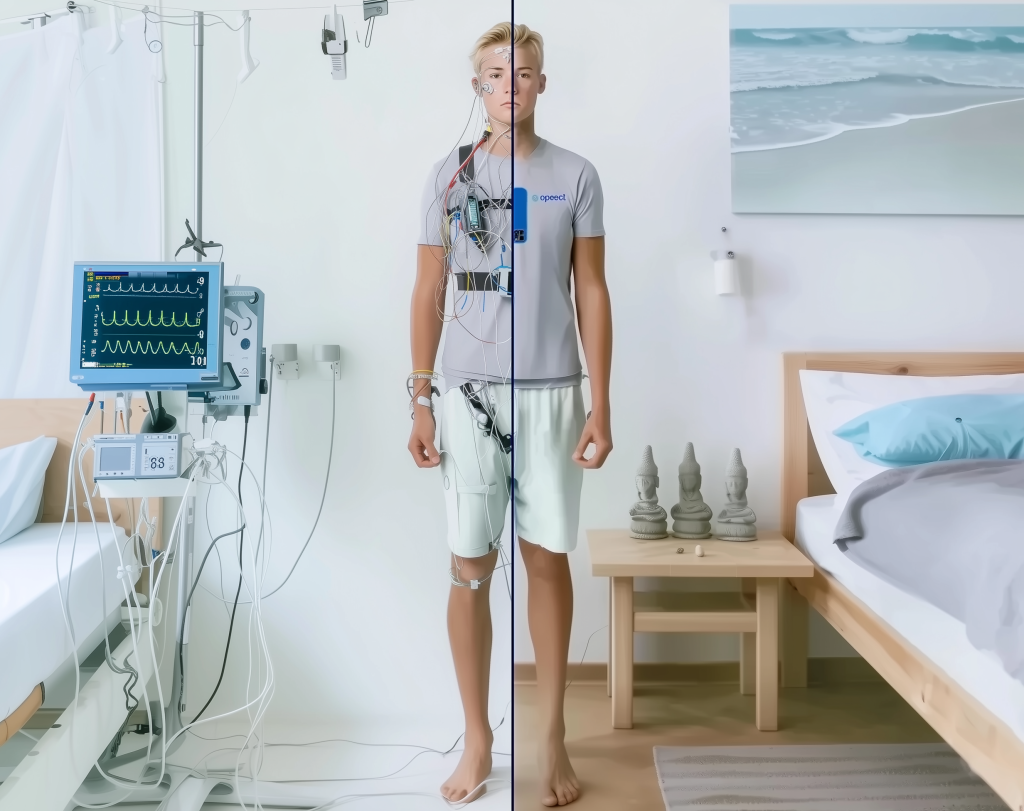
Polysomnography and home polygraphy require dedicated equipment, delivery logistics and a healthcare professional to set up — barriers for patients and health systems alike.

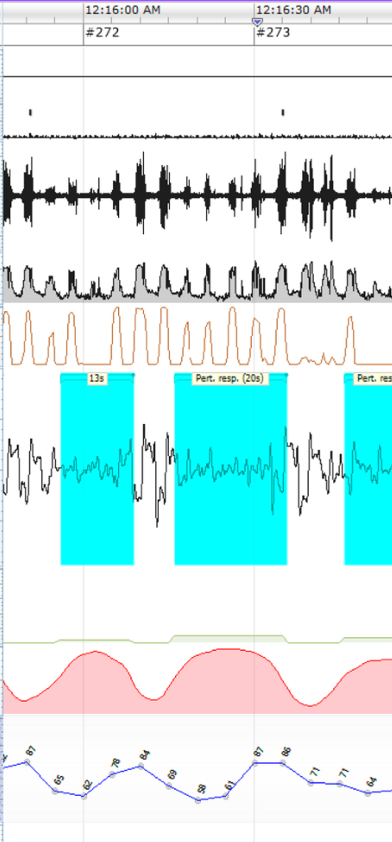
Apneal captures the same physiological signals through the sensors already inside the patient’s smartphone, and analyses them with AI to produce a clinical report that physicians can use in their diagnostic evaluation.

No device to ship, retrieve, clean or maintain. No accessory. No electronic waste. The test can start the very night of the consultation.

1

Simple and Secure Setup

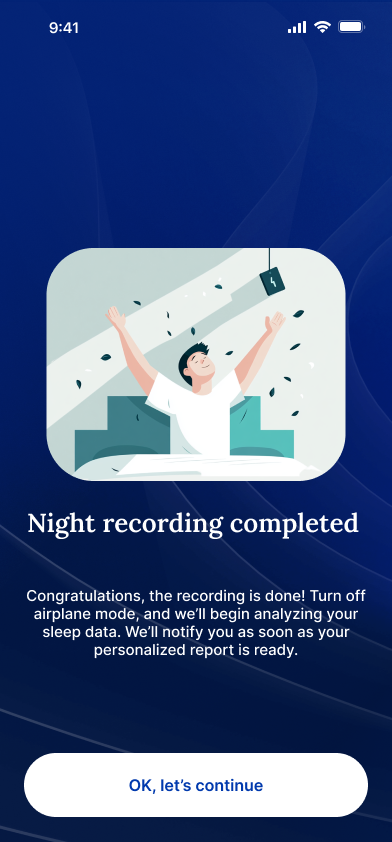
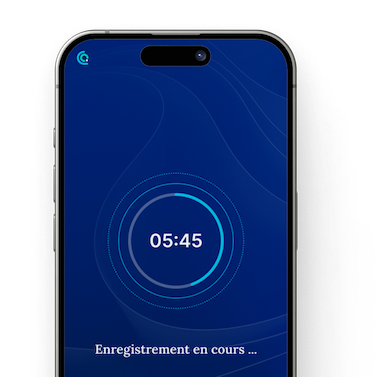
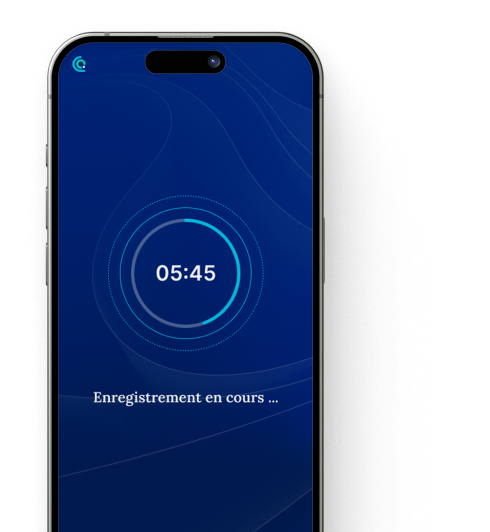
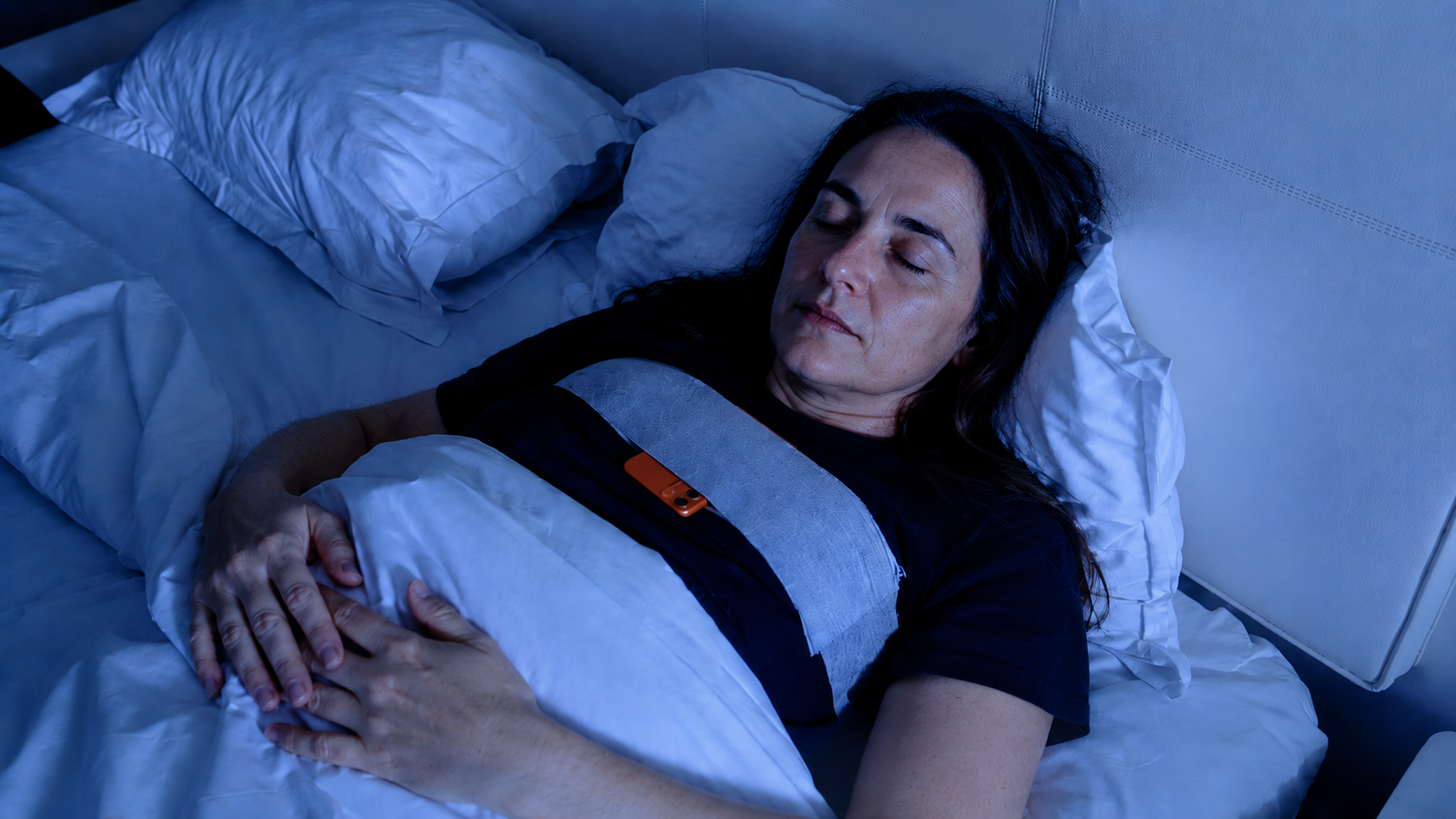
The smartphone is placed on the chest, over pyjamas, held by adhesive and cohesive bands available at any pharmacy — with airplane mode activated. The app guides each step, and the night is spent naturally, in one's own bed, in any position.
about_img
about_img
2

Overnight Cardiorespiratory Recording

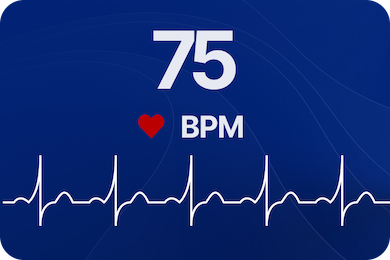
The sensors already inside the phone record breathing movements, breathing sounds and snoring, and heart rate — the same cardiorespiratory signals a sleep test measures, captured differently. Over 95% of smartphones are compatible; nothing else is needed.

3

A Clinical Report the Next Morning

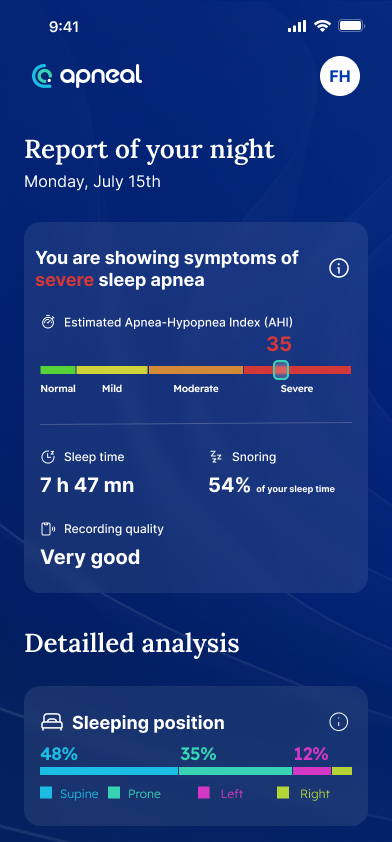
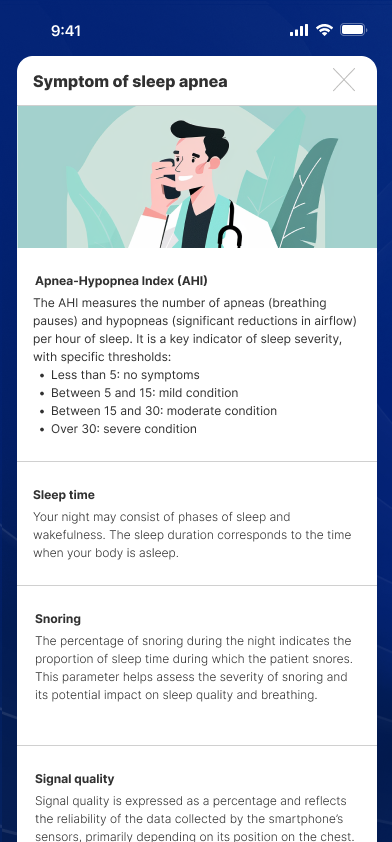
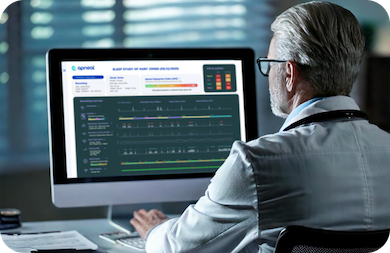
Apneal's AI counts the breathing events of the night — the apnea–hypopnea index — estimates sleep time and tells central events from obstructive ones. A clear night summary is available in the app, and a full report — in the same format as a standard sleep test — is shared with the prescribing physician, who makes the diagnosis.
about_img

Streamlined Care
for Sleep apnea

Apneal enters the care pathway as diagnostic support: fewer barriers for patients, faster orientation for clinicians, and sleep-centre resources kept for the cases that need them. The medical decision stays with the physician — every time.

For the patient

A guided, wire-free test in their own bed, starting the night of the consultation, with a personalised night summary the next morning. Fewer hospital nights, faster access to care.

For sleep specialists

A polygraphy-style report — AHI, sleep time, central vs obstructive events — to prioritise referrals, replace home polygraphy for standard patients and keep polysomnography for complex cases. The diagnosis remains yours.

For frontline healthcare professionals

A reliable first-line test for sleep apnea, with integrated clinical questionnaires, to quickly identify the patients who need specialist referral — without any equipment to stock.

For home care providers

Multi-night recording without hardware logistics: capture night-to-night variability, support treatment titration and long-term follow-up, and keep patients engaged.


bg_shape
Dr Franz Hozer
Psychiatrist

In clinical practice, we still lack simple ways to access objective sleep data. Making this assessment more accessible can help clinicians better understand their patients’ symptoms, support the diagnostic evaluation and guide the next steps of care.

Diagnostic support within your patients’ reach

Whether you are a sleep specialist, a frontline clinician, a home care provider or a health-system decision-maker, our team is ready to help you bring Apneal into your care pathway.